The Essential Guide to Bone Grafting for Dental Implants
TL;DR: Bone grafting for dental implants helps rebuild and strengthen the jawbone when there is not enough healthy bone to support an implant. This guide from Memorial Oral & Maxillofacial Surgery explains why Bone Grafting may be recommended, what the procedure involves, and what patients in Houston, Cypress, and Katy can expect during recovery.
- Bone loss can happen after missing teeth, gum disease, trauma, or long-term denture use
- Bone Grafting may help create a stronger foundation for successful Dental Implants
- Several types of grafting procedures are available, including socket preservation and sinus lifts
- Recovery is often manageable with proper aftercare and guidance from your oral surgeon
- Treatment costs and healing timelines vary depending on your individual needs and treatment plan
If you’ve been told you may need bone grafting for dental implants, you may have questions about why the procedure is necessary and what to expect during recovery. At Memorial Oral & Maxillofacial Surgery, we help patients throughout Houston, Cypress, Katy, and surrounding communities understand their options for rebuilding jawbone support before Dental Implants.
A strong, healthy jawbone is an important part of long-term implant success. In many cases, Bone Grafting can help restore areas where bone loss has occurred, making it possible for patients to move forward with Dental Implants more confidently and comfortably.
Understanding Bone Grafting for Dental Implants
One of the most common questions patients ask is, “What is bone grafting for dental implants?”
Bone Grafting is a procedure used to rebuild or strengthen areas of the jawbone that may not have enough density or volume to support a dental implant. Bone loss can happen for several reasons, including missing teeth, gum disease, trauma, infection, or long-term denture use.
When a tooth is lost, the jawbone in that area may gradually shrink over time because it’s no longer stimulated by the tooth root. If too much bone is lost, placing a Dental Implant may become more challenging without additional support.
Bone Grafts for Dental Implants are designed to encourage your body to regenerate natural bone in the treated area. Depending on your needs, your oral surgeon may use donor bone material, synthetic material, or your own bone tissue as part of the grafting process.
Why Bone Grafting may be recommended
Not every patient needs a bone graft for dental implant placement, but it can be beneficial in many situations.
Your oral surgeon may recommend Bone Grafting if:
- You have experienced bone loss after tooth removal
- You have worn dentures for many years
- Gum disease has weakened the jawbone
- You are planning Full-Arch Dental Implants
- A previous injury affected the bone structure
- You need a sinus lift in the upper jaw
At Memorial Oral & Maxillofacial Surgery, advanced imaging technology helps evaluate the quality and quantity of available bone before treatment begins. This allows your oral surgeon to create a personalized plan based on your anatomy, goals, and oral health needs.
Types of Bone Grafting for Dental Implants
There are several types of bone grafting for dental implants, depending on the location and severity of bone loss.
Socket preservation
This procedure is often performed immediately after a tooth extraction. Bone graft material is placed into the empty socket to help preserve the natural shape and volume of the jawbone.
Ridge augmentation
If the jawbone has become too thin or narrow, ridge augmentation may help rebuild the area so it can better support Dental Implants.
Sinus lift
A sinus lift may be recommended for patients missing upper back teeth. This procedure raises the sinus membrane and adds bone beneath it to create enough support for implant placement.
Major bone grafting
Patients with more advanced bone loss may require larger grafting procedures before implant treatment can begin.
Your oral surgeon will explain which approach may be appropriate for your situation and whether Bone Grafting and Dental Implant placement can occur at the same appointment.
What to expect during the procedure
Many patients are surprised to learn that Bone Grafting is often more manageable than they anticipated.
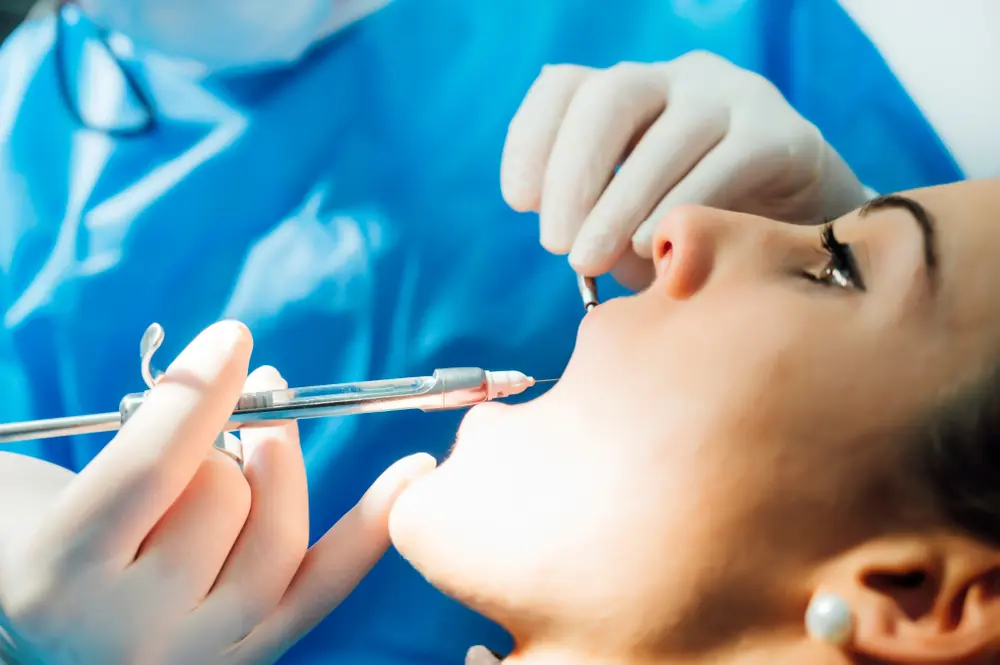
The procedure is typically performed using local anesthesia, IV sedation, or another form of anesthesia depending on your treatment plan and comfort needs. Your oral surgeon will discuss sedation options with you before surgery.
During the procedure, the grafting material is carefully placed into the targeted area of the jawbone. A protective membrane may also be used to support healing and bone regeneration.
Afterward, the site is closed with sutures, and detailed post-operative instructions are provided.
Most patients return home the same day.
Recovery after Bone Grafting
Recovery after a Bone Graft for Dental Implants varies depending on the size of the graft and your overall health. Many patients experience manageable soreness, swelling, or mild bruising for several days following treatment.
Your oral surgeon may recommend:
- Eating soft foods temporarily
- Avoiding smoking or tobacco products
- Limiting strenuous activity for a few days
- Keeping the surgical area clean
- Taking prescribed or recommended medications as directed
Healing and bone integration can take several months in some cases. This healing period allows the graft to become part of the natural jawbone before Dental Implants are placed.
Following post-operative instructions carefully can support smoother healing and improve treatment outcomes.

Understanding the Cost of Bone Grafting for Dental Implants
Another common concern patients have involves the cost of bone grafting for dental implants. Simply put, the total cost can vary depending on several factors, including:
- The amount of bone loss present
- The type of grafting material used
- Whether additional procedures are needed
- The complexity of the case
- Sedation or anesthesia requirements
Because every patient’s needs are unique, the best way to understand expected costs is through a personalized consultation. During your appointment, the team at Memorial Oral & Maxillofacial Surgery can review imaging, explain your treatment plan, and discuss financial information in more detail.
Why choosing an experienced oral surgeon matters
Bone Grafting and Dental Implant placement require detailed planning and surgical expertise. Choosing an experienced oral surgeon can help ensure the treatment plan is designed around both function and long-term oral health.
At Memorial Oral & Maxillofacial Surgery, our team provides patient-centered care for individuals throughout Houston, Cypress, Katy, and nearby Texas communities. We focus on creating a comfortable experience while helping patients restore confidence in their smiles and oral function.
From advanced imaging to customized treatment planning, every step is designed to support safe, predictable care tailored to your needs.
Rebuilding a stronger foundation for your smile
Bone grafting for dental implants can play an important role in rebuilding jawbone support and preparing for successful Dental Implant treatment. Whether bone loss resulted from missing teeth, gum disease, or other oral health concerns, modern Bone Grafting techniques may help restore the foundation needed for long-term function and stability.
If you’re considering Dental Implants in Houston, Cypress, or Katy, Memorial Oral & Maxillofacial Surgery can help you understand your options and determine whether Bone Grafting may be recommended as part of your treatment plan.
Ready to learn more about your treatment options? Request an appointment with Memorial Oral & Maxillofacial Surgery today.
FAQs
How painful is Bone Grafting for dental implants?
Most patients report manageable discomfort rather than severe pain after Bone Grafting. Swelling, soreness, and mild bruising are common for several days, but medications and post-operative instructions are designed to help keep patients comfortable during recovery.
How long do Bone Grafts last for Dental Implants?
Bone grafts used for Dental Implants are intended to become integrated with your natural jawbone. Once healing is complete and the implant is placed successfully, the regenerated bone can provide long-term support depending on your oral health and ongoing care.
Are you awake during a Dental Bone Graft?
Many patients remain awake with local anesthesia during Bone Grafting procedures. However, IV sedation or other anesthesia options may also be available depending on the complexity of treatment and your comfort preferences.
Will my teeth shift after a Bone Graft?
Minor movement in nearby teeth is generally uncommon after a dental bone graft. Your oral surgeon will evaluate your bite and surrounding teeth carefully during treatment planning to minimize complications and support stable healing.
What should I avoid after a Dental Bone Graft?
After a Bone Grafting procedure, patients are usually advised to avoid smoking, strenuous exercise, drinking through straws, and disturbing the surgical site. Following all post-operative instructions carefully can help protect the graft and support healing.